Quote
x
Enquire
Getting the basics right: achieving consistency in the pressroom
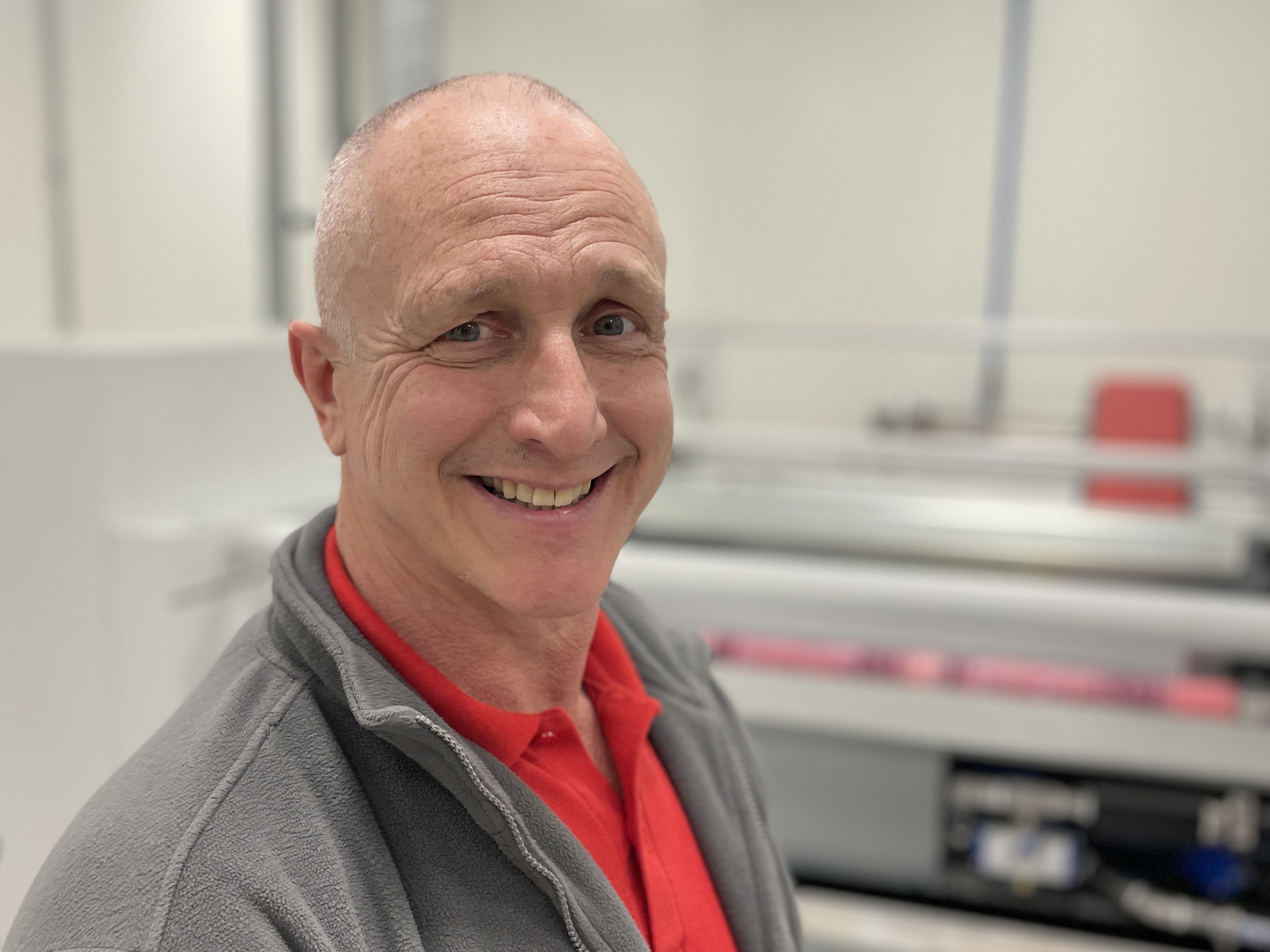
May 2026A Q&A with Technical Services Engineer, Michael Baines
Achieving consistent, high-quality flexographic print is not about quick fixes or one-off adjustments. It relies on discipline, measurement and a clear understanding of process control.
In this Q&A, Michael Baines, Technical Services Engineer at Sandon Global, shares practical insights from more than four decades in print, outlining what really makes a difference in the pressroom and how flexo printers can achieve reliable, repeatable results.
What are your top tips for flexo printers today?
It always comes back to the basics. Correct viscosity, stable inking and accurate impression. If those three are not right, nothing else will fall into place.
There is often a temptation to look for more complex solutions when something goes wrong, but in most cases the issue sits within these core parameters. Even small variations in viscosity will affect ink transfer. Incorrect impression can distort print and increase wear. Inconsistent inking will show across the web.
Control these elements first and you create a solid foundation for the entire flexographic process.
What do you need to achieve consistent print in flexo?
Consistency comes from control, and control comes from measurement.
Key variables such as viscosity, density, dot gain and impression settings should be monitored and recorded. This creates a reference point that can be repeated, reducing variation between runs and improving set-up efficiency.
A critical factor within this is the anilox. The engraved volume, measured in cm³/m² or BCM, is fundamental to ink transfer. If that volume is not tightly controlled during manufacture and then maintained in the pressroom, consistent print becomes difficult to achieve.
Understanding anilox performance, and keeping it within specification, is central to process stability and consistency.
How can printers maintain tight tolerances?
If you don’t measure it, you cannot control it. To maintain tight tolerances, we now measure density, dot gain, viscosity, impression pressures on print and inking. But consistency in how measurements are taken is important. The same lens, the same number of cells and a defined standard operating procedure should always be used.
Regular anilox volume checks after cleaning will provide a clear indication of performance. Tracking changes over time, including cell wall wear, helps identify when refurbishment or replacement may be required. This approach reduces downtime, improves repeatability, colour consistency and supports better long-term planning
What are the most important things you have learned during your career in print?
If you are having problems, stop and check everything!
Do not assume anything has been set correctly. Work through the process step by step. Check viscosity, confirm anilox condition, review impression settings and ensure substrates and plates are correct.
Most issues come down to something simple that has been missed. A structured, methodical approach makes it much easier to identify the cause and resolve it quickly.
What are the biggest challenges printers face today and how can they overcome them?
Waste remains one of the biggest challenges facing the industry, with increasing pressure to reduce it from both a cost and environmental perspective. This includes substrate waste during set-up, as well as inefficiencies caused by poor process control.
Reducing waste starts with consistency. A well-controlled process limits variation, which in turn reduces material usage and minimises downtime.
At the same time, the shift towards recyclable substrates and alternative ink systems introduces new variables that can present challenges on press. Thorough testing of new materials, combined with effective data capture, helps support smoother production and more predictable results.
How can companies maintain print excellence over time?
Cleanliness and maintenance are fundamental.
Daily anilox cleaning and planned maintenance routines ensure stable ink transfer and reliable press performance. A clean environment reduces the risk of contamination and helps mechanical components operate more effectively.
Scheduling regular cleaning as part of the production process supports faster set-up, reduced waste and improved consistency. It also extends the life of key components including the anilox.
Access to testing and validation is also important. At our R&D Print Centre, customers can trial different anilox engravings, inks and materials under controlled conditions. This helps our customers and partners to evaluate performance, troubleshoot challenges and develop new ideas in a practical setting.
Flexo has changed significantly over the years. How far has it come and where is it heading?
Flexo has developed significantly over the past 40 years. The introduction of photopolymer plates, chambered doctor blade systems and high line count anilox has transformed what is possible.
Print quality has moved from simple graphics to fine detail and photographic reproduction. Higher specification engravings, including those above 1200 lcm, allow for tighter control of ink transfer and improved consistency.
As for the future, it’s hard to say what more could be improved. However, I expect the industry will continue to embrace new technologies to move flexo forward even further. Automation, data and AI will no doubt play a key role in improving process control, driving efficiency gains and reducing waste to meet sustainability goals.
What advice would you give to the next generation of printers?
Be consistent and methodical. Do the basics right every time.
Printing is built on repeatable processes. The more structured your approach, the easier it is to maintain quality and solve problems. Understanding how each element of the press interacts will also make a significant difference.
There are no shortcuts. Strong habits and attention to detail are what deliver reliable results!
Final Thoughts
High-quality flexo print is achieved through control, not assumption. The fundamentals of viscosity, inking, impression and anilox performance remain central, regardless of how advanced the technology becomes.
By focusing on measurement, maintaining equipment properly and working in a structured way, printers can improve consistency, reduce waste and achieve more predictable outcomes.
About the Author
Michael Baines is Technical Services Engineer at Sandon Global. A former shift manager, Mike has worked in the print industry since 1984, with extensive experience across both gravure and flexo.
With more than eight years at Sandon Global, he leads the company’s customer anilox maintenance support and training programmes, as well as managing the R&D Print Centre. He works closely with customers on press-side fault finding, helping to resolve issues quickly and achieve consistent, high-quality print at optimum speeds, while also supporting development projects alongside industry partners.
To discover how Sandon Global can help you achieve greater consistency, improved efficiency and tighter flexo process control, get in touch with our team today!
< Return to Blog Posts